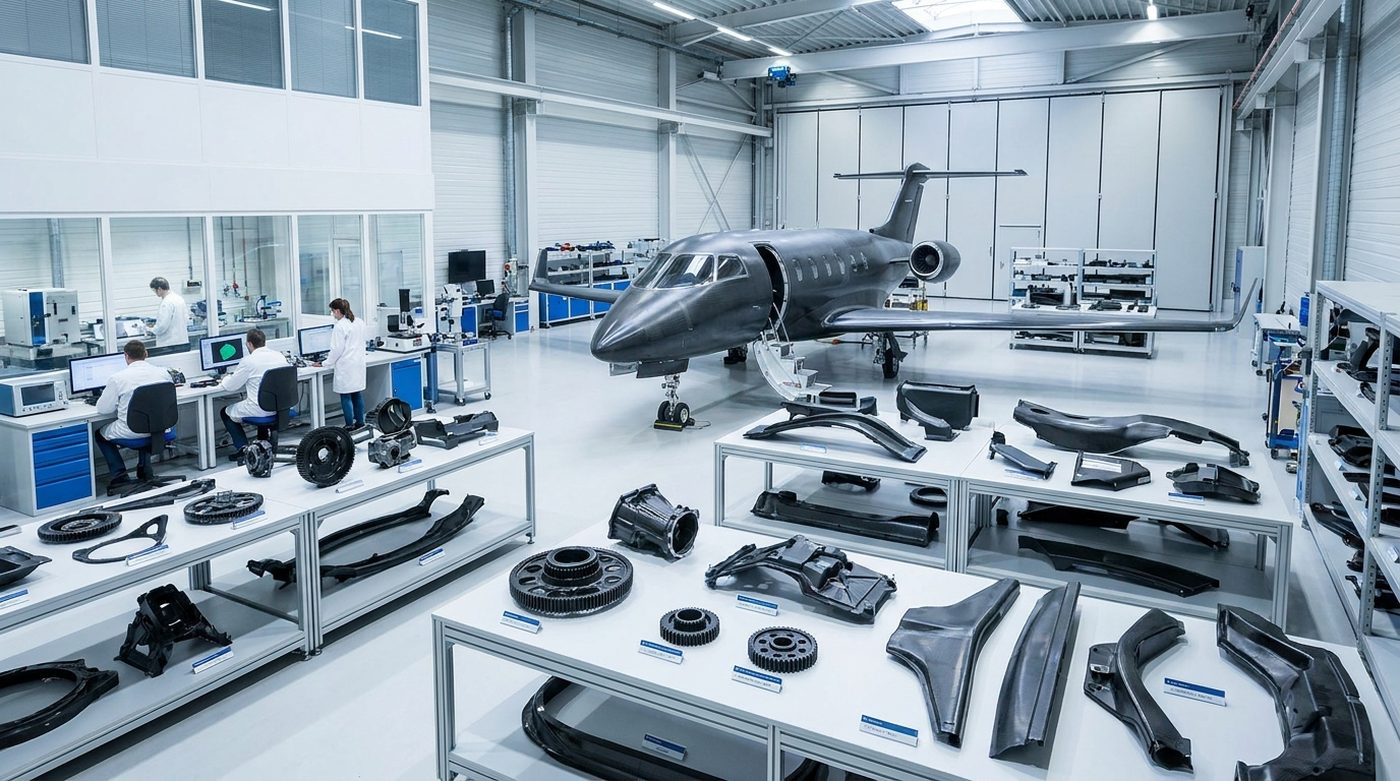
Strategic Polymer Solutions and Advanced Composite Technologies
In the most demanding operational conditions of the national and global defense industry, the performance limits expected from materials are at the maximum level. As Colorex, we produce high-quality masterbatch and functional additive solutions for high-engineering plastics (PA66, PEEK, PPS) and polymer matrix composites required by the aviation and defense industries. Our goal is to play a strategic role in the development of advanced materials that provide tactical weight savings by replacing metal components, without compromising ballistic and structural integrity.
We optimize the mechanical properties of carbon and glass fiber reinforced (GF/PP) composites used in defense systems. Our products have special formulations that maintain thermal stability under extreme temperature fluctuations and increase tensile and impact strength. Our flame retardant and fire-resistant additives designed for military equipment, vehicle body parts, and polymer weapon frames meet the highest safety standards.
Thanks to special stabilizers and anti-corrosion agents integrated into thermoplastic matrices, we prevent the environmental aging of military systems operating in the field and extend their operational lives. In alignment with Turkey's national defense industry vision, we offer sector-specific scientific and innovative solutions with zero error tolerance in our high-tech R&D laboratories.
Recommended Dosage
In standard military equipment and body parts: 1.0% - 2.5%
In high-strength composites and structural components: 2.0% - 4.0%
In high-engineering plastics and flame retardant (FR) applications: 3.0% - 6.0%
POTENTIAL PROBLEMS AND SOLUTIONS IN THE DEFENSE INDUSTRY AND AEROSPACE SECTOR First of all, we would like to state that we take great pride in the magnitude of our domestic defense industry, which is growing stronger day by day, increasing its localization rate, and achieving global success, and in being a part of this ecosystem. Contributing to our country's vision is our greatest motivation. Below are 453 possible problems and solutions, ranked from the most critical vital risks to production and aesthetic details:
Common Problems and Solutions
A technical guide of 448 questions compiled from the field experience of the Colorex engineering team.
How is the shattering of the UHMWPE matrix by a bullet in ballistic vests prevented?
Impact resistance is increased by adding shear-thickening additives to the UHMWPE polymer processed at a 190-degree barrel temperature.
How is smoking prevented in PEEK parts during 380-degree injection in aerospace?
Thermal stabilizers that prevent degradation up to 400 degrees are integrated into the PEEK polymer.
How is the emission of toxic gases by PC/ABS parts during a fire in enclosed spaces stopped?
Halogen-free flame retardants are added into the PC/ABS molded at a 250-degree melt temperature.
How is the melting of the PA66 polymer in weapon bodies during rapid fire solved?
Colorex ceramic heat shields are added to the PA66 matrix formed at an 80-degree mold temperature.
How is the cold brittleness of PPS fins at minus 50 degrees in UAVs prevented?
Toughness is ensured by adding low-temperature impact modifiers to the PPS polymer processed at 320 degrees.
How is the fluctuation caused by flow marks in radar-absorbing PEI parts solved?
Homogeneous dispersion of carbon nanotubes is ensured within PEI at a 300-degree barrel temperature.
How is static electricity accumulation in the POM polymer of ammunition fuzes prevented?
Carbon-based permanent antistatic agents are added into the POM processed at 200 degrees.
How is the splintering of the PC matrix by shrapnel in military helmets prevented?
Colorex anti-splinter tougheners are added to the PC polymer at a 280-degree injection temperature.
How is the glowing of PA6 camouflage on cameras in night operation equipment solved?
Infrared (IR) absorbent pigments are included in the formula while extruding PA6 at 240 degrees.
How is the shielding of the PEKK polymer in drone bodies against EMP weapons increased?
EMI/RFI shielding additives are homogeneously distributed into the PEKK processed at a 360-degree temperature.
How is the swelling of PA66 rifle parts due to moisture absorption in the tropical jungle prevented?
Hydrophobic barrier additives are added to the PA66 polymer injected at 270 degrees.
How is the vibration fatigue of epoxy composites in helicopter rotor blades solved?
Elastomeric cross-linkers are added to the epoxy cured at a 120-degree mold temperature.
How are weapon solvents prevented from melting PBT body parts?
Chemical resistance-enhancing cross-linkers are added to the PBT polymer molded at a 250-degree barrel temperature.
How is the back-face deformation of the HDPE polymer in ballistic plate liners solved?
Colorex shock-absorbing rheological modifiers are added into the HDPE extruded at 210 degrees.
How is the breaking of long glass fiber PP polymer under extreme G-force prevented?
Fiber-matrix binding compatibilizers are included in the PP matrix processed at 230 degrees.
How are submarine PA12 equipments prevented from giving a friction-induced sonar signature?
PTFE and acoustic damping fillers are added to the PA12 polymer injected at 240 degrees.
How is the decrease in the impact strength of flame-retardant PA6 polymer solved?
Micronized agents and impact modifiers are added to the PA6 formula at a 260-degree melt temperature.
How is the UV chalking of PC/PBT parts in desert conditions stopped?
Colorex HALS light stabilizers are added into PC/PBT at a 260-degree barrel temperature.
How is the PEI polymer in the radome dome prevented from refracting radar signals?
Special colorants with a low dielectric constant are added into the PEI molded at 350 degrees.
How is the heat embrittlement of PA46 parts around the tank engine solved?
High-performance heat stabilizer packages are added to the PA46 polymer formed at 310 degrees.
How are TPE gaskets overmolded on metal bodies prevented from cooling and separating from the metal?
Thermal expansion-balancing mineral fillers are added into the TPE molded at 190 degrees.
How is the radiation degradation of PVC polymers in CBRN equipment prevented?
Anti-radiation radical scavengers are included in the flexible PVC formula at a 180-degree extrusion temperature.
How is the rotting of POM material in tent clips due to fungus solved?
Colorex antimicrobial masterbatches are added into the POM at a 200-degree injection temperature.
How is the breaking of bonds in the inner armor PE liner during consecutive shots prevented?
Cross-linking elastomers are added to the PE matrix processed at a 220-degree melt temperature.
How is the explosion of PMMA visors in aircraft cockpits due to sudden pressure prevented?
Volatile gas-absorbing agents are added into the PMMA processed in vacuum extruders at 240 degrees.
How is the crushing and creeping of PP copolymer in ammunition crates over time solved?
Crystallinity-enhancing nucleating agents are added to the PP polymer at a 220-degree injection temperature.
How is the breaking of the PA6 polymer in parachute buckles under sudden shock prevented?
Colorex sudden shock-absorbing elastomers are added to the PA6 material molded at 250 degrees.
How is saltwater penetration of PA11 polymer in naval cable sheaths solved?
Nano-clay layered salt barrier additives are added to PA11 sheaths extruded at 230 degrees.
How is the failure of optical PC lenses to block specific laser frequencies solved?
Spectral pigments providing optical filtering are used while processing PC at a 290-degree barrel temperature.
How is the fuel swelling and leaking of FKM gaskets in jet engines prevented?
Fuel extraction-resistant binders are added into the FKM vulcanized at a 180-degree press temperature.
How is the stripping of gears by friction heat in PPS transmission gears solved?
Colorex self-lubricating PTFE is added to the formula while molding PPS at a 320-degree melt temperature.
How is the agglomeration of fibers in carbon fiber PA66 composites prevented?
Homogeneity is ensured in PA66 with flow modifiers at a 280-degree barrel temperature.
How is the mold corrosion caused by flame-retardant ABS polymer solved?
Special acid-catching scavenger additives are used while ABS melts inside the machine at 230 degrees.
How is the color burning of camouflage-colored PEEK parts at 380 degrees prevented?
High heat-resistant PEI-carrier inorganic pigment masterbatches are added to the PEEK formula.
How is the non-adhesion of PA6 and PP layers to each other in hybrid armors solved?
Colorex reactive compatibilizer tie-layer additives are used at 240 degrees on the co-extrusion line.
How is the failure of glass fiber PA6 polymer to fill thin-walled molds solved?
Viscosity-reducing flow modifiers are added to the PA6 formula at a 270-degree barrel temperature.
How is the asymmetric shrinkage warpage of PA66 gunstocks upon mold ejection prevented?
Nucleating agents providing isotropic shrinkage are used while PA66 cools at an 80-degree mold temperature.
How is the failure of radar housings to weld in 20 kHz ultrasonic welding solved?
Welding-compatible rigidity modifiers are added while processing PA6 at a 250-degree injection temperature.
How is laser marking prevented from making burn marks on PA66 and ruining the barcode?
Contrast is provided by adding Colorex laser marking additives to the polymer melt at 280 degrees.
How is the clogging of the feed throat by PPS polymer in micro-injection solved?
Micro-granules specially produced for the PPS formula are used at a 310-degree feed temperature.
How is the formation of gloss on mold flow lines in black weapon plastics prevented?
Homogeneous matting surface modifiers are added to the ABS matrix at a 260-degree injection temperature.
How are weld lines prevented from becoming breaking points in military helmets?
Molecular modifiers increasing chain entanglement are added to the PC polymer at a 280-degree barrel temperature.
How are lubricants prevented from blooming on the PA6 surface and peeling off the camouflage paint?
Non-migrating paintable internal lubricants are added to the PA6 formula processed at 250 degrees.
How is the drop in ballistic toughness when scrap sprues are added to the PEI polymer solved?
Colorex chain-extending reactive additives are added in the recovery extruder at 360 degrees.
How is the formation of micro-bubbles in the extrusion of transparent PC windows prevented?
PC granules are dried at 120 degrees and processed with volatile gas absorbing agents at 280 degrees.
How is the rapid wear of the barrel and screw by carbon fiber PPS polymer slowed down?
Friction is minimized by using polymeric processing aids at a 330-degree processing temperature.
How is the sharkskin roughness on the surface of PE wire coating prevented? 48. Question: How are PC/ABS parts prevented from being punctured or deformed by ejector pins?
Sticking is prevented by using the Colorex mold release series for PC/ABS at a 250-degree melt temperature.
How is the occurrence of tone differences in khaki camouflage PP ammunition boxes prevented?
Fully automated spectrophotometer-supported masterbatches are used for PP processed at 220 degrees.
How is the volatilization of antistatic liquids causing the PA6 part to attract dust again solved?
Permanent internal antistatic additives are locked into the PA6 polymer matrix at a 240-degree mold temperature.
How is the dusting of masterbatch granules and clogging of machine filters prevented?
Dust-free smooth granules produced with underwater pelletizing technology are added to ABS production.
How is the breaking and shortening of glass fibers while being dosed into PA66 prevented?
Breakage is reduced by using Colorex fiber wetting carriers with optimized viscosity at 280 degrees.
How is the melting and wrapping of the plastic while drilling holes in PA6 parts solved?
Machining-facilitating cutting agents are added into the PA6 formed at a 250-degree machine temperature.
How is the specific gravity difference between lots of PEI raw materials prevented from exceeding the limits?
Production is carried out with precise density stability measurements for PEI compounded at 350 degrees.
How is the necessity of buying tons of PA6 for R&D scale ballistic testing overcome?
Only 5-kilogram PA6 project samples are produced in twin-screw extruders in pilot facilities.
How is the ten-year traceability of PA66 raw material ensured in the AS9100 standard?
270-degree process data is stored in the digital archive for ten years with a barcode system.
How is the risk of ABS parts remaining borderline in UL94 flammability tests eliminated?
Concentrated FR is added to the ABS polymer with the Colorex over-engineering principle at a 230-degree injection temperature.
How is the oxidation of PP granules waiting in military warehouses within two years prevented?
Shelf life is extended with aluminum barrier packaging and antioxidant packages within the PP.
How is the inadequacy of ventilation systems caused by gases emitted while processing PA6 solved?
Odorless eco-friendly PA6 carriers that reduce VOC emissions to zero at 260 degrees are used.
How is the bridging of carbon fiber PA66 masterbatch in the doser prevented?
Spherical and low-friction free-flowing PA66 granules are used in the machine feed hopper.
How is the leakage of the national rifle's custom khaki PA6 formula to foreign competitors prevented?
With confidentiality agreements, this PA6 formula is specially produced in closed-circuit lines at 280 degrees.
How is production maintained when an embargo is placed on the critical imported additive for the PEI polymer?
Colorex alternative plan B formulations from local sources are used for PEI processed at 360 degrees.
How is the localization price advantage of PPS polymer parts provided in defense tenders?
Domestically certified masterbatches produced in Turkey are added to PPS parts molded at 310 degrees.
What is done when the carbon nanotube ratio in the PC matrix is unknown in drone production?
The ratio for the PC resin is optimized on-site at the machine during the 290-degree injection process.
How is the blocking of PA66 exports by banned brominated flame retardants solved?
Phosphorus-nitrogen based FR systems compliant with European norms are used for PA66 processed at 270 degrees.
How is flame-retardant PC polymer prevented from becoming too heavy and reducing aircraft range?
The material is lightened by adding Colorex micro-cellular foaming agents to the PC matrix melting at 280 degrees.
Who provides support when PPS screw RPM heat optimization cannot be done at the facility?
A technical team visits the facility and adjusts the RPM according to the L/D ratio of your machine processing PPS at 320 degrees.
How is the excessive cost increase caused by the long cooling time of PA6 parts prevented?
The cycle is accelerated by adding crystallization-providing nucleating agents to the PA6 polymer at a 260-degree melt temperature.
How is the degradation of PA66 quality due to raw material sacks absorbing moisture in military shipment prevented?
The PA66 polymer is kept dry in outdoor conditions by using valved aluminum bags.
How is the difficulty of proving PA6 performance against Western competitors in military tenders overcome?
Colorex tensile comparison reports are presented against imported competitors with PA6 test bars molded at 250 degrees.
How is the standard confirmed if PPS raw material quality control devices are not available at the facility?
Strength tests of PPS samples processed at 320 degrees are conducted free of charge for the customer at the supplier's laboratory.
How is cheating by a contract mold shop adding scrap PP into PA66 detected?
The part in the field is audited by adding UV tracer chemical barcodes to the original PA66 formula at 280 degrees.
How is the concern of PA6 mold drawings leaking outside while requesting raw material resolved?
With an information security system, 250-degree PA6 molding parameters are protected on encrypted networks.
How is the environmental pollution caused by LDPE plastic casings, which hinders the green army goal, solved?
Casings are made to degrade in nature with PLA-based biodegradable masterbatches extruded at 170 degrees.
How are ABS drone bodies made to look metallic without paint?
Colorex pearlescent metallic masterbatches are added to the ABS matrix at a 230-degree mold temperature.
How is plate-out contamination on the barrel wall prevented while processing PPS polymer with carbon fiber?
High migration-resistant cleaning agents are added into the PPS at a 330-degree injection temperature.
How is the demand to reduce the carbon footprint in PA11 parts met?
Bio-based PA11 processed at 230 degrees and renewable energy certified masterbatches are used.
How are TPE handles prevented from non-adhering to the PC body in two-component injection?
Chemical covalent bonding adhesion promoters are added into the TPE molded at a 200-degree melt temperature.
How is the inter-layer breaking of PEI spare parts to be produced with a 3D printer solved?
Colorex produces granules that maximize layer adhesion for PEI filaments printed at a 360-degree nozzle temperature.
How are metal screw sockets in an epoxy composite prevented from cracking the plastic due to cooling shrinkage?
Elastomeric hoop stress dampeners are added to the epoxy at a 120-degree mold curing temperature.
How is the breaking of PP ammunition box hinges over thousands of openings and closings prevented?
Copolymeric binders with enhanced flex memory are added to the PP copolymer at a 220-degree injection temperature.
How is the transition of the machine back to a standard color accelerated after black PEEK production?
Black PEEK residues at a 380-degree barrel temperature are removed with high-performance machine purging compounds.
How is the slight yellowing of ballistic PC visors coming off the production line solved?
Colorex ultra-transparent optical brighteners that do not disrupt the refractive index are added to the PC matrix processed at 290 degrees.
How is the formation of sink marks on the surface of thick-walled PA6 missile crates prevented?
Micro-foaming agents that compensate for volumetric shrinkage are added to the PA6 polymer at a 250-degree barrel temperature.
How is the static electrification of PA66 polymer in the machine hopper and its sticking to the throat solved?
PA66 granules are dried at 80 degrees and fed with masterbatches having surface slip and antistatic coatings.
How is the surfacing of fibers to the mold surface (glass bleeding) in glass fiber PBT parts prevented?
Surface sealing modifiers are added to the PBT polymer at a 260-degree injection temperature.
How is stress whitening during demolding of ABS trim parts prevented?
Colorex impact modifiers and effective mold release agents are used while molding ABS at a 230-degree melt temperature.
How is the excessive outgassing and clogging of the mold by POM gears while being molded at 200 degrees prevented?
The POM processing temperature is lowered to 190 degrees, and outgassing is minimized with acetal stabilizer packages.
How is the tackiness of TPU cable sheaths in extrusion and their welding together in rolls solved? 91. Question: How is the loss of impact strength prevented while reducing the thickness of PC panels inside the aircraft?
Nano-calcite carbonate-based tougheners are added to the PC matrix during the 280-degree injection process.
How is the cracking of PA12 fuel pipes at minus forty degrees due to engine vibration prevented?
Colorex low-temperature plasticizers are added to the PA12 polymer extruded at 240 degrees.
How is the melting of PP interior trim parts in black-painted military vehicles under the sun prevented?
Infrared ray-reflecting cool black pigments are added into the PP at a 220-degree molding temperature.
How is the breaking from the corners upon dropping of PC/ABS bodies of military radios solved?
Rubbers that increase notched impact strength are added to the PC/ABS alloy at a 260-degree barrel temperature.
How are flow lines in the mold prevented from becoming prominent while processing PPS polymer at 310 degrees?
The mold temperature is increased to 140 degrees, and mica-filled rheology modifiers are added to the PPS formula.
How is the overheating and degradation of the PA66 and carbon fiber mixture in the extruder prevented?
Colorex friction-reducing dispersants are added by lowering the screw RPM and keeping the barrel at 270 degrees.
How is the long-term interaction with skin oil and resulting tackiness in night vision TPE forehead pads prevented?
Sebum and oil resistance-enhancing surface barrier additives are added while molding TPE at a 180-degree injection temperature.
How is the splintering on the surface of pultrusion glass fiber composites in tent poles solved?
Surface smoothing and shrinkage-preventing additives are added to the resin at a 150-degree pultrusion mold temperature.
How is the agglomeration of PA6 masterbatches after storage and their failure to flow from the machine hopper prevented?
PA6 granules are powdered with anti-caking agents and stored in moisture-barrier packaging.
How is the excessive shrinkage of PEI polymer in helicopter acoustic panels at 360 degrees prevented?
Colorex fillers that lower thermal expansion and stabilize it at a 150-degree mold temperature are added to the PEI formulation.
How is the corrosion of military battery ABS boxes due to acid leakage solved?
Instead of ABS molded at 230 degrees, a switch is made to high acid-resistant PP copolymer, and suitable stabilizers are added.
How is plasticizer bleeding under the sun in camouflage PVC coatings prevented?
Non-migrating polymeric plasticizers are added to the PVC formula in the 170-degree coating process.
How is the hardening and loss of shock absorption of weapon TPU butt pads over time prevented?
Long-lasting flexibility-preserving anti-aging packages are added while processing TPU at a 190-degree injection temperature.
How is the blinding of the sensor due to scratching of missile optical sensor PC covers solved?
Colorex nano-silica-based surface anti-scratch agents are added to PC parts molded at 280 degrees.
How is the formation of micro-cracks under deep water pressure in diving PA11 equipment prevented?
Elastomeric network formers that provide high pressure resistance are added to the PA11 polymer at a 240-degree extrusion temperature.
How is propeller wobbling due to unbalanced cooling of military drone PA6 propellers solved?
Shrinkage equalizing and anti-warpage agents are added to the PA6 formula in 80-degree water-cooled molds.
How is the peeling of metallization from plastic in radar-reflecting ABS targets prevented?
Metallization-compatibilizing surfactants are added to the ABS matrix molded at 230 degrees.
How is the breaking of carbon fiber material in UAV PEI landing gears during a hard landing prevented?
Colorex dynamic impact-absorbing alloys are added into the PEI molded at a 370-degree melt temperature.
How is the snagging of the PA6 polymer in ammunition belts while being pulled at high speed solved?
PTFE-based wear and friction-reducing additives are added to the PA6 formula at a 260-degree machine temperature.
How is the self-cracking of POM gears in cold storage due to internal stress prevented?
Annealing is applied to POM parts molded at 190 degrees, and internal stress reducers are added to the formula.
How is the degradation and melting of bonds in the PE sheath of submarine cables under radiation solved?
Silane cross-linkers providing electron beam resistance are added to the PE formula on the 200-degree cable line.
How is staining by acidic food on in-flight PC/ABS trays prevented?
Colorex fluorocarbon-based stain-repellent additives are added to PC/ABS panels molded at a 260-degree injection.
How is the yield creep of PPS gaskets under high pressure in hydraulic valves prevented?
The creep resistance of the material is increased with glass bead and carbon fiber reinforcements while processing PPS at 310 degrees.
How is the yellowing of military PMMA lighting lenses due to LED heat and blocking of light solved?
High heat-resistant optical stabilizers and antioxidants are added into the PMMA molded at 240 degrees.
How is the covering of camouflage due to dust collection on desert camouflage PP ammunition boxes prevented?
Dust-repellent permanent antistatic agents are locked into the PP formula at a 220-degree mold temperature.
How is the dulling and becoming slippery of warship epoxy coatings with saltwater solved?
Colorex UV stabilizers and anti-slip fillers are added to the epoxy during resin curing.
How is the hardening like stone and loss of grip of military boot TPU soles in extreme cold prevented?
Special plasticizers that maintain low-temperature flexibility are added to the TPU elastomer molded at 190 degrees.
How is the extremely matte and dry exit of the mold surface in missile PPS fins solved?
Flow enhancers that accelerate surface resin flow are used in the PPS formula at a 320-degree melt temperature.
How is the material causing allergies with sweat acids in wearable PA12 technologies prevented?
Biocompatible and sweat-resistant skin-friendly stabilizers are added to the PA12 polymer extruded at 230 degrees.
How is the swelling of drone PA46 engine covers due to extreme engine oil exposure solved?
Colorex hydrocarbon barrier-forming agents are added to the PA46 matrix at a 310-degree injection temperature.
How is the uneven electrical conductivity in parts made of nanotube PEI composites prevented?
Nanotube-dispersing anti-agglomeration dispersants are used for PEI in high-shear extruders at 360 degrees.
How is the mixing of green and brown PA6 melts in the mold during camouflage injection prevented?
PA6 injection speeds are optimized at 260 degrees, and viscosity-equalizing flow agents are added.
How is the micro-cracking of TPE coatings with ozone gas in high-altitude antennas solved?
Anti-ozonant and surface-protecting paraffinic waxes are added to the TPE sheath on the 190-degree cable line.
How is the delamination of bulletproof PC and PU glasses under the sun prevented?
Colorex UV-barrier transparent optical tie-layer polymers are extruded between the PC and PU layers.
How is the long-term melting and becoming sticky of the rubbery texture on weapon ABS grips prevented?
Migration-blocking actives are added to the ABS matrix to be compatible with paints applied at 230 degrees.
How is the extreme thinning of material in the corners of military HDPE water jerrycans solved? 127. Question: How is the collapse of the polymer due to turbo heat in under-hood PA66 pipes prevented?
High-temperature dimensional stabilizer glass beads are added into the PA66 processed in the blow molding machine at 280 degrees.
How is the PTFE additive making the PEI polymer extremely brittle on radome surfaces solved?
Colorex elastomeric interfacial cushions that surround PTFE particles are used while processing PEI at 350 degrees.
How is the short pressing life and tearing of silicone military keyboard keys prevented?
Tear strength-increasing nano-silica binders are added to LSR silicone at a 160-degree vulcanization temperature.
How is the vitrification and breaking of missile PA11 fuel tanks with cryogenic liquid fuel prevented?
Cryogenic toughening fluorinated copolymers are added to the PA11 polymer during extrusion at 240 degrees.
How is the softening and sagging of field-3D-printed PETG drone wings under the sun solved?
Modifiers that raise the glass transition temperature are added into the PETG printed at a 240-degree nozzle temperature.
How is the rapid calcification and breaking of POM buckles with seawater and sun prevented?
Colorex UV and hydrolysis resistance packages are added together to the POM material molded at 190 degrees.
How is the cracking of flashlight PMMA lenses out of their housing due to firing recoil solved?
PMMA is switched to PC polymer at a 240-degree molding temperature, and optical tougheners are used.
How is the stringing during the pelletizing of flame-retardant PP masterbatch prevented? 135. Question: How is the peeling and clogging of ammunition PTFE Teflon coatings in the barrel prevented?
Nano-ceramic binders that maximize metal surface adhesion are added to the PTFE coating sintered at 340 degrees.
How is the drying of helicopter EPDM wipers in the sun and their scratching of the glass prevented?
Colorex UV-resistant self-lubricating silicone oils are added to the EPDM compound during vulcanization at 170 degrees.
How is the incomplete baking of corners in the oven in rotational PE crates solved?
Thermal fluidizers that accelerate in-mold heat transfer are added to the PE powder at a 280-degree oven temperature.
How is the leaking of the weld seam in laser-welded PA66 boxes prevented?
The weld is strengthened by adding a laser-absorbing carbon black masterbatch to the bottom PA66 layer where the laser passes.
How is the reduction in range caused by ASA antenna covers absorbing high-frequency signals prevented?
Special polymeric alloys with a loss factor close to zero are used while processing ASA at a 240-degree barrel temperature.
How is the hydrolysis and flaking off of tent PU fabric coatings solved?
Colorex anti-hydrolysis carbodiimide agents are added to the PU resin on the 150-degree coating line.
How is the burnt diesel effect in cockpit PC grilles due to gas entrapment in the mold prevented?
The injection speed is reduced at 280 degrees, and heat-resistant internal lubricants are used in the PC formula.
How is the snapping of tabs when inserting spring pins into aerospace PA66 terminal blocks prevented?
Silicone-based toughening agents compatible with the flame retardant are added into the PA66 at a 270-degree melt temperature.
How is the separation from weld lines of battery ABS housings upon dropping solved?
Molecular agents that increase in-mold melt fusion are used for ABS molded at a 230-degree barrel temperature.
How are thermal PEI rings prevented from expanding in hot/cold and breaking the lens?
The expansion coefficient is balanced by adding a Colorex glass fiber and mineral filler hybrid into the PEI molded at 350 degrees.
How is the emergence of porosity in the center while machining parts from PPS rods prevented?
Water baths are optimized during extrusion at 320 degrees, and void-preventing nucleating agents are added to the PPS formula.
How is the breaking of POM buckles while trying to buckle them at minus twenty degrees solved?
Copolymeric acetal modifiers that provide flexing margin at low temperatures are added to the POM polymer in a 190-degree injection.
How is the collapse of drone EVA landing sponges over time and their loss of shock absorbency prevented?
Peroxide stabilizers that increase cross-link density are added into the EVA during 160-degree press molding.
How is the stripping of corners while seating into the barrel rifling in PA66 ammunition sabots prevented?
Colorex molybdenum additives providing dimensional stability are added to the formula while molding PA66 at 280 degrees.
How is the collapse of NR/SBR military tires due to polymer melting after shrapnel impact solved?
Heat-damping and structure-protecting aramid dispersions are added to the rubber liner during vulcanization at 180 degrees.
How is the spontaneous cracking of PC transparent visors post-production due to internal stress prevented?
Oven annealing is applied to PC parts molded at 280 degrees, and internal stress-reducing plasticizers are added to the formula.
How is the tearing of helicopter TPU fuel bladders by JP-8 sulfur components prevented?
Nano-layered clays forming a sulfur barrier are added into the TPU during 190-degree film extrusion.
How is the loss of form and permanent denting of PP transport foam under heavy load solved?
Colorex melt strength enhancers are added to the PP melt during physical foaming at 220 degrees.
How is the squeezing of fibers by PBT tubes while flexing in fiber optic cables prevented?
Elastomers preserving the bending radius are added to the PBT polymer on the 250-degree extrusion line.
How are TPE corner protectors on magnesium cases prevented from failing to absorb impact in a fall?
The hardness of the TPE polymer molded at 200 degrees is optimized, and shock-absorbing porous additives are added.
How is the breaking of PA66 Cordura yarns during spinning in tactical assault vests solved?
Special antioxidants preventing PA66 yarn breakage are used in 280-degree fiber spinning.
How is the abrasion of the mechanism by sand and dust in mine-sweeping ABS pipes prevented?
Colorex self-lubricating and dust-repellent siliconized additives are locked in while extruding ABS at 230 degrees.
How is the asymmetric shrapnel distribution at the moment of explosion in ABS explosive warheads solved?
Micro-notch forming additives providing controlled fragmentation are distributed into the ABS in a 230-degree injection.
How is the increase in the friction coefficient of the UHMWPE polymer on snow in winter gear prevented?
Slipperiness on ice is maximized by adding fluorinated waxes to the UHMWPE matrix molded at 200 degrees.
How is the breaking like glass of PVC field tent windows at sub-zero temperatures prevented?
Adipate-based plasticizers providing low-temperature flexibility are added to the PVC foil during 180-degree calendering.
How is the failure of military camouflage paints to adhere to the PPS body and their peeling off during washing solved?
Mold release silicones are removed while processing PPS at 310 degrees, and Colorex polarity agents increasing paint adhesion are added.
How is the formation of splay due to moisture in drone PA12 propellers prevented?
PA12 granules are dried at 80 degrees and processed with moisture-scavenging chemical agents at 240 degrees to prevent surface defects.
How is the softening and leaking of LDPE ammunition plugs in hot storage solved?
HDPE alloys raising the melting point and cross-linkers are added to the LDPE matrix molded at 180 degrees.
How is the irregularity of the foam cellular structure in PU boot soles and water intake of the boot prevented?
Cell regulators and hydrophobic silicone surfactants are added to the PU compound in the polyurethane machine.
How is the warpage of PP food trays in the dishwasher at high heat prevented?
Colorex talc and nucleation agents providing high HDT value are added to the PP copolymer during 220-degree molding.
How is the cracking of anti-aircraft PC boxes over time with heavy ammunition loads solved?
Strength is increased by using load-distributing elastomers at the base of the bucket while molding PC at 280 degrees.
How is the fading and glowing of PA6 helmet covers under UV light prevented?
High-fastness UV-protective military pigments are locked into the PA6 polymer during yarn spinning at 260 degrees.
How is the peeling off of the epoxy between aluminum and PC lens in optics during thermal shocks prevented?
Compatibilizing surface modifiers that can form bonds with epoxy are added to the edges while the PC lens is molded at 280 degrees.
How is the irregularity of matte and glossy areas in TPU tactical gloves due to mold release spray solved?
External spray is abandoned in 190-degree injection, and Colorex homogeneously matting internal mold release agents are added into the TPU.
How are ABS missile transport bumpers prevented from shattering to pieces when impacted at minus forty degrees?
PC alloy is added to the ABS matrix at a 230-degree melt temperature, and rubbers providing cold impact toughness are used.
How is the shrinking and antenna disruption of PET-filmed military RFID tags at high heat prevented?
Thermal shrinkage-preventing and dimensional stabilizer packages are added to the PET formula during 260-degree film extrusion.
How is the failure to withstand pressure and crushing of submarine PU acoustic tiles solved?
Pressure-resistant micro glass beads and acoustic damping elastomers are added into the PU during the resin casting process.
How is the fibrillation of UHMWPE polymer in parachute cords while being pulled rapidly prevented?
Smooth UHMWPE cord spinning is ensured with Colorex chain-slipping polymeric surface modifiers in the gel spinning process.
How is POM zippers burning or not adhering to the tent fabric while being molded onto it solved?
The flowability of POM is increased with melt accelerators at a 190-degree injection temperature to fill the mold without burning the fabric.
How is the failure of the TPEE sheath to grip the antenna wire and creating a gap in radio antennas prevented?
Metal-polymer adhesion promoter maleic anhydride copolymers are added to the TPEE formula on the 210-degree extrusion line.
How is the formation of a vacuum void in the center while molding thick PC sight glasses prevented?
The holding pressure time is extended at 290 degrees, and thermal balancers ensuring slow cooling are used in the PC matrix.
How is the stripping of PU mastics from the surface while gluing PA66 UAV bodies solved?
Colorex polarity-increasing surfactant modifiers are added to increase the surface energy of PA66 molded at 280 degrees.
How is the failure of PP battery separator films to close pores upon heating, leading to thermal runaway, prevented?
Thermal fuse melt-down additives that melt and clog at 130 degrees are added into the PP during 220-degree film casting.
How is the breaking of recycled PA6 ammunition bodies while exiting the barrel prevented?
Impact-damping and polymer-repairing chain extenders are mandatorily used while molding recycled PA6 at 250 degrees.
How is the crumbling of radar TPE gaskets due to UV rays and friction solved?
UV-barrier carbon black and PTFE-based friction reducers are added into the TPE during extrusion at 190 degrees.
How is the yellowing of white PC parts while waiting inside the machine prevented?
Colorex antioxidant packages that stop thermal oxidation are used while PC waits at a 280-degree barrel temperature.
How are rattling and loosening caused by vibration in cockpit ABS panels prevented?
Vibration-absorbing acoustic elastomers are added to the ABS resin at a 240-degree injection temperature.
How is the fatigue of radio PBT latches due to continuous pressing in the spring mechanism prevented?
Dynamic cross-linkers that extend fatigue life are added to the PBT copolymer formed at 250 degrees.
How is algae and mussel adhesion stopped in PE unmanned surface vehicles?
Non-toxic anti-fouling surface-repellent additives are locked into the PE polymer rotationally molded at 210 degrees.
How is the internal fogging of night vision PMMA lenses due to ambient humidity prevented?
Colorex permanent anti-fog surfactants are integrated into the resin while processing PMMA at a 230-degree mold temperature.
How is the cracking of HDPE material in logistics pallets due to forklift impacts solved?
Impact-damping ethylene-octene copolymers are added to the HDPE polymer during 220-degree injection.
How is the melting and becoming sticky of armored vehicle TPE handles in summer heat prevented?
The melting point of the TPE elastomer molded at 190 degrees is raised with thermal balancer additives.
How is the zeroing of material flexibility by FR additives in PPS rocket tubes prevented?
Polymeric flame retardants and flexibility preservers are applied to the PPS matrix at a 320-degree melt temperature.
How is the shrinking and loss of buoyancy of EVA life vest foams in saltwater solved?
Colorex salt barrier agents preserving the closed-cell structure are added to the EVA formula during 160-degree foaming.
How is the breaking of helicopter PA66 cable ties during assembly in the cold prevented?
Water-retaining toughening additives that provide flexibility are added to the PA66 polymer processed at a 270-degree barrel temperature.
How is the abrasion of ASA sensor housings by sandstorms prevented?
Nano-ceramic fillers increasing surface hardness are integrated into the ASA matrix during 250-degree injection.
How is the heating up and melting of PU UAV tires at high speed prevented?
Graphite-based thermal conductors that rapidly dissipate heat are added to the PU resin at a 180-degree casting temperature.
How is the rotting with fungus and odor generation of PVC tent floorings stopped?
Colorex long-release anti-fungal silver ion additives are added to the PVC compound coated at 170 degrees.
How is the chafing of the soldier's neck by friction from PA6 rifle sling straps solved?
Skin-friendly modifiers providing surface lubricity are applied to PA6 yarns during 250-degree fiber spinning.
How is the bending and diameter narrowing of flame-retardant PP ventilation ducts prevented?
Glass bead reinforcements providing high creep resistance are added to the PP polymer during 220-degree extrusion.
How is dust collection and soiling of military tablet silicone cases prevented?
Antistatic dust-repellent barriers that lower surface energy are added into liquid silicone during 160-degree vulcanization.
How is the aiming disruption caused by the deformation of POM anti-aircraft bearings under heavy load solved?
Colorex aramid fiber reinforcements maximizing compressive resistance are added to POM parts molded at 200 degrees.
How is the cracking and shattering of phenolic rocket nozzles under extreme heat shock prevented?
Thermal shock-damping silica nanotubes are integrated into the phenolic matrix at a 150-degree curing temperature.
How is the breaking of bonds in carbon fiber epoxy panels by space radiation prevented?
Space-grade cosmic radiation shielding additives are added to the epoxy resin during 120-degree autoclave curing.
How is the dulling and hiding of bullets due to solvent contact in tactical PC magazines solved?
Solvent barrier formers that do not disrupt transparency are added to the PC matrix in 280-degree injection.
How is the melting of PU helicopter rotor tapes by de-icing fluids prevented?
Colorex fluorinated binders resistant to anti-icing chemicals are added to the PU film formula during 180-degree extrusion.
How is the transmission of energy to the spine by PUR mine seat sponges during an explosion shock prevented?
Viscoelastic modifiers that flex cell walls and absorb energy are added to the formula in the PU foaming machine.
How is the creation of sparks via static electricity by PTFE aircraft hydraulic hoses prevented?
Static charge is grounded by adding conductive carbon black to the PTFE polymer during 340-degree extrusion.
How is the breaking and causing falls of PA66 climbing carabiners at sub-zero temperatures solved?
Copolyamide elastomers providing toughness down to minus sixty degrees are used while processing PA66 at a 280-degree barrel temperature.
How is the bursting from the seam of ABS gas bomb bodies due to gas pressure prevented?
Colorex chain extenders increasing weld seam strength are added to the ABS polymer at a 230-degree melt temperature.
How is the reflection and view-blocking of PMMA military radar windows solved?
Anti-glare nano-textured additives are integrated onto the PMMA optical surface molded at 240 degrees.
How is the cracking and breaking of TPE diving fins due to the combination of saltwater and UV prevented?
Stabilizers combining hydrolysis and photo-oxidation resistance are added to the TPE elastomer during 190-degree injection.
How is the breaking of PA6 training pistols due to inability to withstand drops prevented?
Rubbers that provide extra toughness and reduce notch sensitivity are added to the PA6 matrix formed at 260 degrees.
How is the sticking and unopenability of TPU tent windows in summer heat solved?
Colorex anti-blocking slip agents that do not disrupt transparency are applied into the TPU film during 190-degree calendering.
How is the spontaneous cracking of PEI missile fins due to internal stress if not annealed prevented?
Polymeric relaxants that dampen internal stresses in the mold are added while molding PEI at a 360-degree process temperature.
How is the ossification and unbendability of TPE radio cables at minus thirty degrees prevented?
Flexibility enhancers with a low glass transition temperature are added into the TPE on the 200-degree extrusion line.
How is the dulling of the outer surface of PC bulletproof glasses by desert wind solved?
Nano-silicon hardeners providing diamond-hard scratch resistance are added to the PC outer layer molded at 280 degrees.
How is the bending fatigue and in-air breaking of POM drone propellers prevented?
Colorex linear elastomers maximizing dynamic fatigue resistance are added to the POM polymer at a 200-degree melt temperature.
How is the loss of plasticity and crumbling of PC/ABS military boot toes under heavy crushing prevented?
Toughening rubber blocks that maintain form during crushing are added to the PC/ABS alloy in 260-degree injection.
How is the flying off of PPA pressure sensor covers due to centrifugal force solved?
Dimensional stabilizer glass fibers providing high adhesion are added into the PPA at a 320-degree process temperature.
How is the shrinking and loss of form of PET military canteens in boiling water prevented?
Nucleation agents that accelerate crystallization and increase heat resistance are added to the PET polymer during the 260-degree blow molding process.
How is the swelling and jamming of NBR tactical buttons with sweat and oil prevented?
Colorex cross-linking vulcanization accelerators that increase oil resistance are added to NBR rubber during 170-degree pressing.
How is the static generation by PA66 parachute fabric causing the parachute to stick together solved?
Conductive polymers preventing friction-induced static are added to the PA66 polymer during 280-degree fiber spinning.
How is the plasticizer bleeding of PVC rifle cases in storage and oiling of the rifle prevented?
High-molecular plasticizers that do not detach from the chain are applied to the PVC formula during 180-degree extrusion.
How is the zeroing of impact strength of ABS rocket crates due to UV effects prevented?
A switch is made to UV-resistant ASA copolymer instead of ABS at a 230-degree barrel temperature, and tougheners are added.
How is the hardening in cold and breaking upon impact of PA12 radio antennas solved?
Colorex copolyamide elastic modifiers providing flexing are added to the PA12 matrix coated at 240 degrees.
How is the shrinking of EPDM glass seals under the sun causing water leakage prevented?
Mineral fillers preventing thermal shrinkage and form preservers are added to the EPDM compound during 170-degree extrusion.
How is the melting by air friction and disruption of aerodynamics of POM ammunition cones prevented?
Nano-ceramic and PTFE mixtures dissipating air friction heat are added to the POM polymer during 200-degree injection.
How is the collapsing of the tent due to PP tent fittings creeping under wind load solved?
Glass fiber reinforcements preserving form under continuous load are added to the PP copolymer at a 220-degree melt temperature.
How is the failure of PC drone housings to flex and breaking to puncture the battery during battery swelling prevented?
Flexibility is imparted by adding Colorex polyester copolymers providing an elongation coefficient to the PC matrix molded at 280 degrees.
How is the pulling of hair and discomforting of the operator by silicone headbands prevented?
Surface modifiers converting surface friction into a silky texture are applied to liquid silicone during 160-degree vulcanization.
How is the crushing of HDPE logistics crates when stacked at 50 degrees in summer solved?
Isotropic nucleating agents providing high HDT are added to the HDPE formula during 220-degree injection.
How is the fuzzing and loss of grip of PA6 hook-and-loop fasteners after opening/closing prevented?
Crystallinity agents that increase hook strength and stop wear are added to PA6 monofilaments during 260-degree extrusion.
How is the micro-cracking and water absorption of epoxy radome composites with solar UV rays prevented?
Colorex nano-clays forming a UV barrier and stopping moisture permeability are added to the epoxy during the resin casting process.
How is the bleeding of numeral ink and resulting fading on TPU keypads solved?
Surface polarization agents forming covalent bonds with printing ink are added into the TPU in 190-degree injection.
How are ABS training bombs prevented from breaking too early upon pin pull, causing accidents?
Rheological modifiers that delay breaking by increasing elongation at break are added to the ABS polymer at a 230-degree melt temperature.
How is the abrasion of POM marine vehicle propellers by cavitation shocks prevented?
Micro-elastomeric cushions absorbing cavitation impact energy are added to the POM matrix molded at 200 degrees.
How is the loosening and detaching of solder in PEEK missile insulators with high-frequency vibration solved?
Colorex inorganic fillers providing vibration isolation and zeroing thermal expansion are added to the PEEK polymer in 380-degree injection.
How is the internal fogging and zeroing of vision in PC military goggles due to sweat and acid vapor prevented?
Transparent polymeric coatings forming a shield against acid vapor are applied to PC optics molded at 280 degrees.
How is the jamming and unopenability of POM backpack buckles when sand gets in prevented?
Ultra-low friction PTFE additives preventing sand adhesion are added to the POM formula processed at 190 degrees.
How is the flexing of PA6 carbon fiber drone arms in the sun and propellers clashing solved?
Cross-linkers preventing modulus loss at high heat are added to the PA6 matrix at a 280-degree barrel temperature.
How is the waterlogging of EVA assault vests becoming heavy and dragging the soldier down prevented?
Colorex rheological agents providing a one-hundred-percent closed-cell structure are added to the EVA compound in the 160-degree foaming machine.
How is the loss of polarization and unreadability of PC cockpit screen protectors in the sun prevented?
Optical stabilizers preserving polarized light are added to the PC film extruded at 280 degrees.
How is the deflating and loss of insulation property of PET sleeping bag fillings over time solved?
Molecular memory agents that make the crimped structure of the fiber permanent are added to the PET polymer during 260-degree fiber spinning.
How is the scratching by boots and ruining of aesthetics of PP armored vehicle upholsteries prevented?
Anti-scratch additives reducing scratch visibility are applied to the PP matrix in 220-degree injection.
How is the fatigue of the PA66 training missile cone from micro-cracks upon repeated impacts prevented?
Colorex elastomeric network formers that dampen impact energy before micro-cracks start are added into the PA66 formed at 280 degrees.
How is the melting and disruption of flexibility of PU mine suit fabrics in extreme heat solved?
High-molecular isocyanate binders raising the thermal melting point are added to the PU resin on the 150-degree coating line.
How is the breaking of ABS radio battery latches at minus twenty degrees and dropping of the battery prevented?
A switch is made to ABS/PC alloy instead of ABS at a 230-degree melt temperature, and cold weather toughness enhancers are added.
How is the softening of PA6 helicopter hose holders with hydraulic oil and releasing of the hose prevented?
Polymeric barrier agents increasing hydraulic oil resistance are added to the PA6 polymer in 260-degree injection.
How is the tearing and water intake of TPU flashlight buttons due to constant pressing solved?
Colorex nano-silica-based toughening agents that stop tear propagation are added to the TPU elastomer molded at 190 degrees.
How is the sticking together and unrolling failure of PE pallet stretch films in hot warehouses prevented?
Transparent anti-blocking slip agents preventing adhesion are applied to the PE formula during 200-degree film casting.
How is the reacting and cracking of PA12 tactical eyeglass temples with skin creams prevented?
Surface passivation additives increasing ESCR (environmental stress cracking resistance) are added to the PA12 matrix in 240-degree injection.
How is the embrittlement under UV and bursting by pressure of ABS water purifier covers solved?
UV stabilizers that preserve pressure resistance by relieving internal stresses are added to the ABS polymer at a 230-degree barrel temperature.
How is the hardening and peeling of PVC deck non-slip tapes with saltwater prevented?
Colorex polymeric binders preventing saltwater from stripping the plasticizer are added to the PVC compound on the 170-degree coating line.
How is the tooth stripping and locking of PPS fin mechanisms under high torque prevented?
Aramid fiber and carbon fiber hybrid reinforcements maximizing gear strength are added into the PPS molded at 320 degrees.
How is the bacteria breeding and infection causing of EPP helmet pads with sweat and heat solved?
Silver-ion antimicrobials providing permanent hygiene are added to EPP beads in the foaming process.
How is the cracking of the PC screen frame when wiped with an alcohol wipe prevented?
Polyester modifiers preventing solvent-induced cracking are applied to the PC matrix in 280-degree injection.
How is the embrittlement and breaking of PA6 camouflage clips in the jungle due to UV rays prevented?
Colorex carbon-based stabilizers preventing UV protection and color fading are added to the PA6 polymer at a 260-degree melt temperature.
How is the excessive hardening and loss of comfort of PUR submarine beds due to flame retardants solved?
Reactive softeners compatible with the flame retardant and increasing cell wall flexibility are added to the formula in polyurethane casting.
How is the blistering of the aluminum coating on PC reflectors from the plastic due to LED heat prevented?
Fillers that prevent polymer expansion and increase coating adhesion are added to PC reflectors molded at 280 degrees.
How is the flexing by centrifugal force and imbalance of PP drone propellers at high RPM prevented?
Long glass fiber (LGF) compatibilizers that zero out flexing are added to the PP matrix in 220-degree injection.
How is the tearing of TPE training weapons from the firing pin area due to continuous dry firing solved?
Colorex cross-link intensifiers distributing the stress at the impact point are added to the TPE polymer molded at 190 degrees.
How is the squeaking and making noise of ABS air conditioning vents with cold-hot cycling prevented?
Silicone lubricants lowering the friction coefficient and preventing squeaks are applied to the ABS polymer at a 230-degree barrel temperature.
How is the outgassing of PE ammunition plugs into the box prevented?
Gas absorbing agents that trap volatile gas emissions are added to the PE matrix in 180-degree injection.
How is the chalking and color fading of PE lifebuoys due to the sea-sun combination solved?
Seawater-resistant UV absorbents are added to the PE powder in rotational molding at 200 degrees.
How is the loss of flexibility and failure to lock of PA6 tent hook-and-loops in dusty terrain prevented?
Colorex dust-repellent and continuous flexibility-preserving copolyamide additives are integrated into PA6 monofilaments during 260-degree extrusion.
How is the cracking of PC/PBT laser housings from screw sockets due to weapon recoil prevented?
Elastomeric cushions dampening the hoop stress in screw sockets are added to the PC/PBT alloy molded at 260 degrees.
How is the swelling and breaking of PU tactical watch bands with sweat and sunscreen solved?
Cross-linked network formers creating an oil and chemical barrier are added to the PU elastomer in 190-degree molding.
How is the shattering of PP rocket pallets when lifted by a forklift at minus thirty degrees prevented?
EPR rubber copolymers increasing impact strength in extreme cold are added to the PP polymer in 220-degree injection.
How is the crumbling over time and spilling into the cockpit of melamine helicopter acoustic sponges prevented?
Colorex anti-crumbling flame-retardant binders are sprayed onto the foam surface during the foaming and cutting process.
How is the reaction of PMMA compass bodies with the fluid inside and forming capillary cracks solved?
Stabilizers that provide chemical resistance and relieve internal stresses are added to the PMMA matrix in 240-degree injection.
How is the hardening in cold and making it difficult for the soldier to open TPU zipper pulls with gloves prevented?
Flexibility agents maintaining softness at any temperature are added to the TPU polymer molded at 190 degrees.
How is the breaking of the tab by the firing shock in POM lock mechanisms prevented?
Modifiers that absorb the shock wave and allow the tab to flex are added to the POM polymer at a 190-degree melt temperature.
How is the deformation of Tritan military spoons in boiling water solved?
Colorex nucleation agents raising the heat deflection temperature to a safe limit are applied to the copolyester matrix in 270-degree injection.
How is the drying under UV and leaking of water of PA12 hose fittings prevented?
Additives that stop moisture loss and preserve sealing properties are added to the PA12 polymer formed at 240 degrees.
How is the yellowing of PC military goggles by gunpowder gases prevented?
Transparent surface protection agents repelling gunpowder gases are added to PC optics molded at 280 degrees.
How is the very rapid breaking of PA66 tactical shoelaces by rubbing against rocks solved?
Nano-silica anti-wear agents increasing the abrasion resistance of the cord are added to the PA66 polymer during 280-degree fiber spinning.
How is the melting and flattening by friction on the concrete runway of rubber material in UAV tires prevented?
Form distortion is stopped by adding Colorex heat-resistant aramid short fibers to the rubber compound in the vulcanization process.
How is the swelling of PA6 fuel caps with diesel vapor and jamming of the cap prevented?
A switch is made to POM or PBT polymer instead of PA6 in 260-degree injection, and stabilizers are added.
How is the shattering of ABS tent pegs while being hammered into hard ground solved?
PC alloy is added to the ABS matrix at a 230-degree melt temperature, and the peg is toughened by adding impact-damping rubbers.
How is the melting with engine heat and collapsing of TPE ventilation hoses prevented?
TPV alloys raising the melting point are added to the TPE elastomer during 200-degree extrusion.
How is the flexing of PMMA tactical flashlight lenses in desert heat and flashlight leaking water prevented?
Colorex thermal stabilizers providing high HDT are applied to PMMA optics molded at 240 degrees.
How is the flaking fiber by fiber of PP battle ropes with seawater and UV solved?
UV stabilizers with high seawater resistance are added to the PP polymer during 220-degree fiber spinning.
How is the micro-cracking of TPU radio covers with antenna bending prevented?
Chain modifiers maximizing continuous bending resistance are added to the TPU elastomer during 190-degree extrusion.
How is the swelling with finger oil and ruining the feel of silicone laser buttons prevented?
Fluorosilicone additives imparting oil-repellent properties are added to liquid silicone in 160-degree vulcanization.
How is the hardening in winter and box taking in water of EPDM ammunition gaskets solved?
Colorex special plasticizers maintaining flexibility at minus forty degrees are applied to the EPDM compound during 170-degree vulcanization.
How is the loosening of screws by firing vibration in PA6 helmet camera mounts prevented?
Elastomeric dampeners absorbing vibration energy are added to the PA6 matrix molded at 260 degrees.
How is the weight increase of PVC personnel lockers due to flame retardants and thus increasing ship weight prevented?
Non-flammability and lightness are achieved by adding lightening micro-foaming agents to the PVC formula during 180-degree extrusion.
How is the flexing in the sun and causing the tent to sag of HDPE tent pipes solved?
Isotropic glass beads increasing creep resistance under heat are added to the HDPE polymer in 220-degree extrusion.
How is the melting of adhesive from heat and falling off of PET cockpit labels prevented?
Colorex high heat-resistant acrylic adhesive compatibilizers are added to the PET matrix during 260-degree film casting.
How is the non-flexing and hurting the soldier's hand of epoxy knuckle guards prevented?
Elastomers allowing the composite to flex at a micro level are added to the epoxy matrix during the resin curing stage.
How is the shattering to pieces of PA66 training missile propellers upon hitting the target solved?
Toughening rubbers that allow crushing instead of shattering are added to the PA66 polymer injected at 280 degrees.
How is the crazing of PPS battery connectors while inserting pins prevented?
Elastomer modifications dampening pin-driving stress are applied into the PPS at a 320-degree melt temperature.
How is the internal oxidation and whitening of TPE binocular coatings with saltwater vapor prevented?
Colorex antioxidant packages forming a shield against seawater vapor are added to the TPE elastomer in 190-degree molding.
How is the breaking of corners of PP logistics pallets when dropped on concrete at minus twenty degrees solved?
Special elastomeric copolymers absorbing impact energy at sub-zero temperatures are added to the PP polymer in 220-degree injection.
How is the embrittlement in the sun and breaking by the power of the wiper motor of POM wiper arms prevented?
Aramid reinforcements providing UV stability and high torque resistance are added to the POM matrix at a 190-degree melt temperature.
How is the flexing and deformation of PA66 military ammunition carrier hooks under excessive load prevented?
Short carbon fiber fillers maximizing structural rigidity are added into the PA66 molded at a 280-degree barrel temperature.
How is the mechanical jamming of POM lock clips in desert sandstorms prevented?
PTFE micropowders preventing sand particles from adhering to the surface are added to the POM polymer at a 190-degree melt temperature.
How is the cracking of PP logistics crate corner brackets with dynamic impact during stacking solved?
Colorex multi-phase elastomeric matrices with impact directing properties are included in the PP copolymer in 220-degree injection.
How is the hydrolytic melting of TPU earphone sponge covers with soldier sweat stopped?
Carbodiimide-based anti-degradation additives forming a hydrolysis shield are added to the TPU elastomer molded at 190 degrees.
How is the loss of flexibility and shrinking of EPDM fuel hose outer gaskets under UV prevented?
UV-damping and heat-balancing active carbon black packages are applied to the EPDM compound in 170-degree vulcanization.
How is the expanding and overflowing from its housing of FKM rocket gaskets under extreme pressure prevented?
Special silicas increasing compression resistance and providing shape memory are added to the FKM vulcanizate at a 180-degree press temperature.
How is the oil absorption and swelling of silicone oxygen mask edges with long-term skin contact solved?
The lipophilic property is broken by adding Colorex surface passivation agents to liquid silicone in 160-degree LSR injection.
How is the loss of shape and warping of ABS tent pole protection boxes in summer months prevented?
ABS-PC alloy and thermal distortion raising agents are integrated into the ABS matrix in 230-degree injection.
How is the expansion with charging heat and crushing the waterproofing gasket of PC military battery covers prevented?
Nano-mineral cushions minimizing the thermal expansion coefficient are added to PC parts molded at 280 degrees.
How is the rapid abrasion of HDPE ammunition pallet bases with ground friction during transport solved?
Silicon dioxide-based additives increasing wear resistance and lubricity are added into HDPE molded at 220 degrees.
How is the chalking and graying of PP light weapon carrying cases under the sun prevented?
Colorex high-spectrum HALS stabilizers maintaining black color fastness are added into PP at a 220-degree barrel temperature.
How is the formation of surface dullness in the mold during the production of PMMA laser reflectors prevented?
Flow accelerators maintaining crystal clarity and fully fitting the mold surface are added to PMMA optics molded at 240 degrees.
How is the blurriness created by internal stress caused by thermal fluctuation in PC armor glasses solved?
Polymeric relaxants dampening optical fluctuation are included in the PC formula in 290-degree thick-walled injection.
How is the yellowing of transparent PA12 fuel level indicator tubes with jet fuel contact prevented?
Aviation-grade antioxidants stopping chemical oxidation are added into PA12 on the 240-degree extrusion line.
How is the micro-cracking of PEEK aircraft engine internal insulators at 400 degrees shock heat prevented?
Colorex ceramic-based fillers absorbing sudden temperature fluctuation are applied to the PEEK polymer molded at 380 degrees.
How is the detachment from screw locations of PEI radar circuit board carriers with frequency vibrations solved?
Long glass fiber binders distributing screw tightening stress to the entire surface are added to the PEI matrix formed at 360 degrees.
How is the drawing of ambient moisture and creating fogging in the image by PPS thermal camera frames prevented?
Barrier modifiers completely blocking moisture transfer are added to the PPS formula at a 320-degree melt temperature.
How is the damage by rodents to PVC communication cable outer sheaths prevented?
Odorless but rodent-repelling special repellant additives are locked into PVC during 180-degree cable extrusion.
How is the loss of dielectric resistance of PBT submarine sensor connectors with saltwater vapor solved?
Colorex silane shielders preventing hydrolysis and ion transfer are added to the PBT polymer molded at 250 degrees.
How is the overheating and deformation with continuous rotation of POM helicopter propeller pin bushings prevented?
Graphite fillers accelerating heat transfer and reducing wear are added to the POM matrix in 200-degree injection.
How is the clogging of PTFE barrel internal slide bearings with carbon residues after firing prevented?
Special nano-fluorinated agents preventing carbon adhesion are applied to the PTFE coating sintered at 340 degrees.
How is the embrittlement and breaking while pressing in emergencies of PA66 missile firing button brackets solved?
Elastomeric toughening rubbers maximizing impact resistance are added into PA66 at a 270-degree barrel temperature.
How is surface stripping under torque of PPS rocket fin drive gears prevented?
Colorex aramid fiber and PTFE hybrids increasing gear surface hardness are added to the PPS formula molded at 320 degrees.
How is the loss of strength due to extreme lightening of PEI unmanned aerial vehicle cockpit internal holders prevented?
Physical micro-foaming agents not compromising strength are integrated into the PEI polymer molded at 360 degrees.
How is the structural degradation of PEKK high-altitude sensor housings with cosmic rays solved?
Boron nitride additives providing a cosmic radiation shield are added to the PEKK matrix at a 360-degree process temperature.
How is the cracking with continuous open-close of PC/ABS military laptop screen hinges prevented?
Modifiers increasing fatigue strength and lowering friction are added to the PC/ABS alloy in 260-degree injection.
How is the delamination from visor attachment points of field-3D-printed PETG face shields prevented?
Colorex copolyester binders increasing z-axis layer adhesion are added into PETG printed at a 240-degree nozzle temperature.
How is the melting at 50 degrees heat and sticking to the barrel of PLA eco-friendly training ammunition casings solved?
Nucleation agents raising the heat distortion temperature to a safe limit are applied to the PLA formula in 190-degree extrusion.
How is the failure to withstand wind resistance and flexing of ABS 3D-printed drone spare wings prevented?
Short carbon fiber reinforcements increasing bending modulus are added to the ABS filament printed at a 230-degree nozzle temperature.
How is the very porous surface finish of PA12 powder sintered SLS military spare parts prevented?
Flow agents increasing surface smoothness and closing pores are added to PA12 powders in the SLS sintering process.
How is the extremely fast wear on concrete floors of TPU unmanned ground vehicle track gears solved?
Colorex silicone-based additives increasing abrasion resistance against concrete friction are added to the TPU elastomer molded at 190 degrees.
How is the separation into layers and losing protectiveness of epoxy composite ballistic plates under multi-hit prevented?
Reactive interfacial binders preventing sliding between layers are applied to the epoxy resin during 120-degree autoclave curing.
How is the failure to flex and breaking in hard landings of PA6 helmet inner impact-absorbing lattices prevented?
Toughening elastomers that absorb energy by changing shape at the moment of shock are added to the PA6 matrix molded at 260 degrees.
How is the inability of POM tactical steel vest clips to withstand extreme pulling force in harsh conditions solved?
Oriented glass fiber fillers maximizing tensile strength are added to the POM polymer in 190-degree injection.
How is the warping of PP military medic transport boxes due to temperature in the sterilization oven prevented?
Colorex nucleation agents increasing autoclave heat resistance and preserving shape are added to the PP copolymer at a 220-degree melt temperature.
How is the complete scratching of PC military flashlight lens protectors by desert storms creating a sandblasting effect prevented?
Nano anti-scratch additives providing a surface shield at diamond hardness are integrated into PC parts molded at 280 degrees.
How is the flexing from the bottom by the buoyancy force of water of HDPE amphibious vehicle flotation pontoons solved?
Talc and glass sphere mixtures providing high bending modulus are added to the HDPE formula blow-molded at 220 degrees.
How is the chemical staining of PMMA targeting laser optics from gunpowder gases at the shooting range prevented?
Fluorocarbon-based transparent protectors repelling chemical vapors from the surface are applied to the PMMA matrix in 240-degree injection.
How is the loss of gloss and dulling of ASA vehicle-mounted radio antenna housings under extreme sun prevented?
Colorex dual-action light stabilizers preserving surface gloss and UV fastness are added into the ASA molded at 250 degrees.
How is the allergic reaction inside the ear with long-term use of TPE earplug material solved?
Skin-friendly and sweat-repellent agents that have passed biocompatibility tests are added to the TPE elastomer in 190-degree molding.
How is the shrinking and leaking at minus twenty degrees of waterproof seals of PA12 border post cameras prevented?
Copolyamide plasticizers that do not lose elasticity at low temperatures are added to the PA12 polymer coated at 240 degrees.
How is the failure to protect the device and splitting into two upon drops of ABS mine detector bodies prevented?
ABS-PC alloy is added to the ABS matrix at a 230-degree barrel temperature, integrating tougheners that absorb drop shock.
How is the non-flammability of PBT electrical circuit breaker housings at 250 degrees operating heat ensured?
Colorex halogen-free flame retardants providing high oxygen index are applied to the PBT polymer in 250-degree injection.
How is the oxidation and charring of PEEK aircraft engine exhaust insulation parts at temperatures over 380 degrees prevented?
Aviation-grade ceramic reinforcements stopping extreme thermal oxidation are added to the PEEK polymer molded at 380 degrees.
How is the giving of capillary cracks of PEI submarine torpedo cover sensor housings under saltwater pressure prevented?
Elastomeric agents dampening internal stress under deep water pressure are added to the PEI matrix formed at 360 degrees.
How is the corrosion and breaking by sulfur in the fuel of PPS rocket fuel pump fans solved?
Special passivation additives blocking sulfur attack and increasing chemical resistance are applied to the PPS formula at a 320-degree melt temperature.
How is the shedding of bristles upon solvent contact of POM military rifle barrel cleaning rod brushes prevented?
Colorex agents preventing solvent-induced cracking and increasing root retention are added to the POM polymer in 190-degree injection.
How is the hardening in cold weather and slowing down the tower rotation of PTFE radar tower sliding bearings prevented?
Special nano-dry lubricants maintaining lubricity at low temperatures are added to the PTFE coating sintered at 340 degrees.
How is the drying and snapping under mud and sun of TPU military boot zipper guards solved?
Mud-repellent hydrophobic barriers and high UV stabilizers are integrated into the TPU elastomer molded at 190 degrees.
How is the outgassing over 180 degrees and ruining the hydraulics of FKM fighter jet hydraulic O-rings prevented?
Thermal stabilizer packages providing low volatility (outgassing) are added to the FKM vulcanizate at a 180-degree press temperature.
How is the tearing from the bodywork while opening an iced door of EPDM winter vehicle door seals prevented?
Colorex fluorosilicone-based surface agents preventing ice adhesion are added to the EPDM compound during 170-degree vulcanization.
How is the fatigue and tearing of silicone gas mask valves with continuous breathing solved?
Cross-linkers extending dynamic fatigue life and providing tear resistance are applied to liquid silicone in 160-degree LSR injection.
How is the shattering and flying off at the first bullet of PA66 infantry rifle flash hider plastic covers prevented?
Elastomeric shock absorbers dampening bullet exit pressure are added into PA66 molded at a 280-degree barrel temperature.
How is the loss of shape when filled with hot food of PP military mess kit (karavana) transport boxes prevented?
Talc fillers increasing the heat distortion temperature and nucleation agents are added to the PP polymer in 220-degree injection.
How is the shattering to pieces of PC armored vehicle headlight protection grilles by shrapnel impact solved?
Colorex toughening rubbers dampening impact energy before micro-cracks start are integrated into PC parts molded at 280 degrees.
How is the tearing from the base when lifted while the box is full of ABS ammunition box carrying handles prevented?
Molecular extenders strengthening the weld seam between the handle and body are added to the ABS polymer at a 230-degree melt temperature.
How is the yellowing over time with spotlight heat of PMMA helicopter interior lighting diffusers prevented?
Antioxidants stopping thermal oxidation and preserving light transmittance are applied to PMMA optics molded at 240 degrees.
How is surface corrosion in salty sea air of ASA radio wave reflecting antenna bodies solved?
Hydrophobic barrier additives stopping saltwater vapor permeability are added to the ASA matrix molded at 250 degrees.
How is the deformation of PA12 diver equipment connection clips at 50 meters depth with water pressure prevented?
Colorex cross-linkers providing dimensional stability against deep water pressure are added to the PA12 polymer in 240-degree extrusion.
How is the becoming slippery with soldier sweat and causing the goggles to fall of TPE tactical goggle nose pads prevented?
Hydrophilic micro-fillers maintaining the friction coefficient upon sweat contact are integrated into the TPE elastomer molded at 190 degrees.
How is the dulling and losing carbon fiber texture under the sun of epoxy attack boat composite hulls solved?
UV-protective and photo-oxidation stopping agents that do not disrupt transparency are applied to the epoxy resin during 120-degree autoclave curing.
How is the breaking and becoming unusable while being attached at very low temperatures of POM mine cord connection pins prevented?
Copolymeric acetal modifiers providing flexing margin at sub-zero temperatures are added to the POM polymer in 190-degree injection.
How is the fatigue and spontaneous releasing after repeated use of PA6 training bomb levers prevented?
Colorex linear elastomeric binders maximizing dynamic fatigue resistance are added to the PA6 matrix at a 260-degree melt temperature.
How is the breeding of fungus in the jungle and causing skin infection of PU tactical earphone sponges solved?
Long-release anti-fungal and silver-ion antimicrobial additives are added to the PU compound in the polyurethane foaming machine.
How is the sagging when left under the sun in the field of PETG laser scanner spare part prints prevented?
Copolyester modifiers raising the heat deflection temperature to a safe limit are added into PETG printed at a 240-degree nozzle temperature.
How is the breaking upon impact during shooting practices of ABS military compass cord adjustment buckles prevented?
A switch is made to ABS-PC alloy instead of ABS at a 230-degree barrel temperature, and rubbers increasing notched impact strength are applied.
How is the complete scratching and blinding the screen by desert dust of PC military tablet screen protectors solved?
Colorex transparent nano-silicon hardeners providing diamond-hard scratch resistance are integrated into PC parts molded at 280 degrees.
How is the generation of capillary cracks over time due to internal stress in storage of PPS rocket firing fuzes prevented?
Polymeric relaxants dampening internal stresses and providing dimensional stability are added to the PPS formula at a 320-degree melt temperature.
How is the extreme heating and melting under high frequency of PEI radar waveguide components prevented?
Thermal conductors that rapidly dissipate heat to the surface and do not disrupt electromagnetic properties are added to the PEI matrix molded at 360 degrees.
How is the embrittlement and breaking off in cosmic cold of PEKK spacecraft outer surface sensor housings solved?
Cryogenic toughening and radiation-resistant boron nitride additives are added into PEKK at a 360-degree process temperature.
How is the cracking from the hook mouth due to firing recoil of PA66 rifle shoulder sling hooks prevented?
Colorex rubber modifiers reducing notch sensitivity and providing flexibility are applied into PA66 molded at a 270-degree barrel temperature.
How is jamming in cold weather in the moving parts of PTFE missile fuel valves prevented?
Dry film lubricating agents minimizing friction at low temperatures are added to the PTFE coating sintered at 340 degrees.
How is the yellowing over time and cutting off flashlight light of TPU night operation flashlight protectors solved?
Optical UV stabilizers preserving light transmittance and delaying yellowing are added to the TPU elastomer molded at 190 degrees.
How is the corrosion in oil at high RPM of FKM armored vehicle transmission gaskets prevented?
Cross-linkers providing extra chemical resistance against oil additives are integrated into the FKM vulcanizate at a 180-degree press temperature.
How is the giving of micro-cracks with the combination of UV and ozone of EPDM outdoor communication cable seals prevented?
Colorex active carbon black packages forming an anti-ozonant and UV shield are applied to the EPDM compound in 170-degree vulcanization.
How is the becoming sticky with soldier sweat and pulling hair of silicone face mask straps solved?
Silky texture agents lowering the surface friction coefficient are added to liquid silicone in 160-degree LSR injection.
How is the whitening and fatigue with repeated open-close of PP ammunition transport crate locks prevented?
Elastomers preventing stress whitening and extending fatigue life are added to the PP copolymer in 220-degree injection.
How is the complete bending and entering the eye without breaking under ballistic impact of PC ballistic protective goggle lenses prevented?
Transparent nano-fillers increasing rigidity and limiting deformation upon impact are added to PC optics molded at 280 degrees.
How is the breaking and leaving the camera exposed when dropped in winter of ABS military thermal camera covers solved?
Colorex core-shell rubbers providing cold impact toughness are integrated into the ABS matrix at a 230-degree melt temperature.
How is the fogging inside the lens due to ambient moisture of PMMA tactical optical magnifier lenses prevented?
Permanent anti-fog and moisture transfer-cutting surfactants are applied into PMMA molded at 240 degrees.
How is the color fading and graying in the desert sun of ASA radio communication tower fittings prevented?
High-performance HALS stabilizers preserving color fastness and stopping UV degradation are added into ASA molded at 250 degrees.
How is the embrittlement with seawater hydrolysis of PA12 unmanned marine vehicle terminals solved?
Polymeric chain protector barrier agents against seawater hydrolysis are added to the PA12 polymer in 240-degree extrusion.
How is the hardening and failure to absorb shock on cold winter days of TPE tactical boot impact-absorbing soles prevented?
Colorex special plasticizer packages preserving their flexibility in extreme cold are applied to the TPE elastomer molded at 190 degrees.
How is the softening with solar heat and disrupting propeller balance of epoxy drone carbon fiber arms prevented?
Thermal stabilizers maximizing the glass transition (HDT) temperature are added to the epoxy resin during 120-degree autoclave curing.
How is the extreme heating and melting with bullet friction of POM machine gun belt feed bearings solved?
PTFE-based dry lubricants lowering friction heat and preventing wear are added to the POM polymer in 190-degree injection.
How is the breaking from the lip area due to being repeatedly dropped on the ground in shooting practices of PA6 training weapon magazines prevented?
Elastomeric toughening network formers spreading shock energy to the entire body are integrated into the PA6 matrix at a 260-degree melt temperature.
How is the bursting from the seams due to pressure difference of PU air-cushioned military carrying bags prevented?
Colorex cross-linked isocyanate agents increasing adhesion strength are applied to the PU resin on the 150-degree coating line.
How is the warping while being sterilized at high heat of PETG field hospital spare visor prints solved?
Copolyester agents raising the heat distortion temperature to the autoclave limit are added into PETG printed at a 240-degree nozzle temperature.
How is the softening with soldier sweat while holding it in hand before throwing of PLA training hand grenades prevented?
Surface passivation additives forming a moisture and sweat barrier against hydrophilic attacks are added to the PLA formula in 190-degree extrusion.
How is the failure to absorb impact and transmitting it to the body upon landing on hard concrete of ABS military drone landing gears prevented?
ABS-PC alloy and impact energy-absorbing rubber modifiers are integrated into the ABS matrix at a 230-degree barrel temperature.
How is the corrosion and melting with lithium battery leakage of PC military battery housings solved?
Colorex acid-resistant polymeric coatings forming a chemical shield against battery acids are applied to PC parts molded at 280 degrees.
How is the cracking from screw sockets with high recoil of PPS thermal weapon scope frames prevented?
Aramid fiber and elastomeric cushion hybrids dampening screw stress are added to the PPS formula at a 320-degree melt temperature.
How is the breaking of glass with deep water pressure and cold water shock of PEI unmanned submarine camera glass housings prevented?
Agents dampening internal stress under deep water pressure and thermal shock are added to the PEI matrix formed at 360 degrees.
How is the breaking of bonds with space radiation and extreme cold cycling of PEKK spacecraft robotic arm joints solved?
Boron nitride additives providing a cosmic radiation shield are applied to the PEKK matrix at a 360-degree process temperature.
How is the non-flexing and breaking during assembly due to flame retardant additives of PA66 missile launcher electrical cable holders prevented?
Colorex toughening silicone elastomers compatible with flame retardants are added into PA66 molded at a 270-degree barrel temperature.
How is mechanical jamming in sandstorms of PTFE radar tower gear bearings prevented?
Nano-fluorinated ultra-dry lubricants preventing sand and particle adhesion are integrated into the PTFE coating sintered at 340 degrees.
How is the hardening and cracking with UV and mud effects over time of TPU military boot impact-resistant toe parts solved?
Hydrophobic mud-repellent barriers and high-performance UV stabilizers are applied to the TPU elastomer molded at 190 degrees.
How is the outgassing at extreme braking heat and ruining brake fluid of FKM armored personnel carrier brake gaskets prevented?
Aviation-grade thermal stabilizer packages providing low volatility are added to the FKM vulcanizate at a 180-degree press temperature.
How is the sticking to the iced glass and tearing while opening of EPDM winter vehicle wiper blades prevented?
Colorex fluorosilicone-based surface slip agents preventing ice adhesion are added to the EPDM compound during 170-degree vulcanization.
How is the fatigue and snapping with continuous stretching and releasing of silicone oxygen mask head straps solved?
Cross-linkers extending dynamic fatigue life and providing tear resistance are integrated into liquid silicone in 160-degree LSR injection.
How is the pressurizing with hot food and losing sealing property of PP military food canteen gaskets prevented?
Nucleation agents increasing dimensional stability under heat and elastomeric gaskets are added to the PP polymer in 220-degree injection.
How is the puncturing by shrapnel impact of PC military vehicle roof lamp protection grilles prevented?
Transparent tougheners dampening impact energy before micro-cracks start are applied to PC parts molded at 280 degrees.
How is the tearing from the base when lifted while the crate is completely full of ABS ammunition crate lock mechanisms solved?
Molecular extenders strengthening the weld seam between the lock and body are added to the ABS polymer at a 230-degree melt temperature.
How is the dulling over time and cutting off light with wind friction of PMMA helicopter exterior lighting protective lenses prevented?
Colorex surface-hardening transparent nano-fillers against wind and sand friction are added to PMMA optics molded at 240 degrees.
How is surface corrosion with salty sea water splashing of ASA radio wave directing antenna bodies prevented?
Hydrophobic barrier additives stopping saltwater vapor permeability are integrated into the ASA matrix molded at 250 degrees.
How is the deformation with deep water pressure and dropping the fin of PA12 diver fin connection clips solved?
Cross-linkers providing dimensional stability against deep water pressure are applied to the PA12 polymer in 240-degree extrusion.
How is the becoming slippery with soldier sweat and losing adjustment of TPE tactical goggle strap adjustment buckles prevented?
Hydrophilic micro-fillers maintaining the friction coefficient upon sweat contact are added to the TPE elastomer molded at 190 degrees.
How is the dulling under the sun and losing its carbon fiber texture of epoxy attack boat composite hulls prevented?
Colorex UV protective and photo-oxidation stoppers that do not disrupt transparency are added to the epoxy resin during 120-degree autoclave curing.
How is the breaking and becoming unusable while being attached at extremely low temperatures of POM mine cord connection pins solved?
Copolymeric acetal modifiers providing flexing margin at sub-zero temperatures are integrated into the POM polymer in 190-degree injection.
How is the fatigue and spontaneous releasing after repeated use of PA6 training bomb levers prevented?
Linear elastomeric binders maximizing dynamic fatigue resistance are applied to the PA6 matrix at a 260-degree melt temperature.
How is the causing of skin infection by breeding fungus in the jungle of PU tactical earphone sponges prevented?
Long-release anti-fungal and silver-ion antimicrobial additives are added to the PU compound in the polyurethane foaming machine.
How is the sagging when left under the sun in the field of PETG laser scanner spare part prints solved?
Colorex copolyester modifiers raising the heat deflection temperature to a safe limit are added into PETG printed at a 240-degree nozzle temperature.
How is the breaking upon impact during shooting practices of ABS military compass cord adjustment buckles prevented?
A switch is made to ABS-PC alloy instead of ABS at a 230-degree barrel temperature, and rubbers increasing notched impact strength are integrated.
How is the complete scratching and blinding the screen by desert dust of PC military tablet screen protectors prevented?
Transparent nano-silicon hardeners providing diamond-hard scratch resistance are applied to PC parts molded at 280 degrees.
How is the generation of capillary cracks over time due to internal stress in storage of PPS rocket firing fuzes solved?
Polymeric relaxants dampening internal stresses and providing dimensional stability are added to the PPS formula at a 320-degree melt temperature.
How is the extreme heating and melting under high frequency of PEI radar waveguide components prevented?
Colorex thermal conductors that rapidly dissipate heat to the surface and do not disrupt electromagnetic properties are added to the PEI matrix molded at 360 degrees.
How is the embrittlement and breaking off in cosmic cold of PEKK spacecraft outer surface sensor housings prevented?
Cryogenic toughening and radiation-resistant boron nitride additives are integrated into PEKK at a 360-degree process temperature.
How is the cracking from the hook mouth due to firing recoil of PA66 rifle shoulder sling hooks solved?
Rubber modifiers reducing notch sensitivity and providing flexibility are applied into PA66 molded at a 270-degree barrel temperature.
How is jamming in cold weather in the moving parts of PTFE missile fuel valves prevented?
Dry film lubricating agents minimizing friction at low temperatures are added to the PTFE coating sintered at 340 degrees.
How is the yellowing over time and cutting off flashlight light of TPU night operation flashlight protectors prevented?
Colorex optical UV stabilizers preserving light transmittance and delaying yellowing are added to the TPU elastomer molded at 190 degrees.
How is the corrosion in oil at high RPM of FKM armored vehicle transmission gaskets solved?
Cross-linkers providing chemical resistance against oil additives are integrated into the FKM vulcanizate at a 180-degree press temperature.
How is the giving of micro-cracks with the combination of UV and ozone of EPDM outdoor communication cable seals prevented?
Active carbon black packages forming an anti-ozonant and UV shield are applied to the EPDM compound in 170-degree vulcanization.
How is the becoming sticky with soldier sweat and pulling hair of silicone face mask straps prevented?
Silky texture agents lowering the surface friction coefficient are added to liquid silicone in 160-degree LSR injection.
How is the whitening and fatigue with repeated open-close of PP ammunition transport crate locks solved?
Colorex elastomers preventing stress whitening and extending fatigue life are added to the PP copolymer in 220-degree injection.
How is the complete bending and entering the eye without breaking under impact of PC ballistic protective goggle lenses prevented?
Transparent nano-fillers increasing rigidity and limiting deformation upon impact are integrated into PC optics molded at 280 degrees.
How is the breaking and leaving the camera exposed when dropped in winter of ABS military thermal camera covers prevented?
Core-shell rubbers providing cold impact toughness are applied to the ABS matrix at a 230-degree melt temperature.
How is the fogging inside the lens due to ambient moisture of PMMA tactical optical magnifier lenses solved?
Permanent anti-fog and moisture transfer-cutting surfactants are added into PMMA molded at 240 degrees.
How is the color fading and graying in the desert sun of ASA communication tower fittings prevented?
Colorex HALS stabilizers preserving color fastness and stopping UV degradation are added into ASA molded at 250 degrees.
How is the embrittlement with seawater hydrolysis of PA12 unmanned marine vehicle terminals prevented?
Polymeric chain protector barrier agents against seawater hydrolysis are integrated into the PA12 polymer in 240-degree extrusion.
How is the hardening and failure to absorb shock on cold winter days of TPE tactical boot impact-absorbing soles solved?
Special plasticizer packages preserving their flexibility in extreme cold are applied to the TPE elastomer molded at 190 degrees.
How is the softening with solar heat and disrupting propeller balance of epoxy drone carbon fiber arms prevented?
Thermal stabilizers maximizing the glass transition (HDT) temperature are added to the epoxy resin during 120-degree autoclave curing.
How is the extreme heating and melting with bullet friction of POM machine gun belt feed bearings prevented?
Colorex PTFE-based dry lubricants lowering friction heat and preventing wear are added to the POM polymer in 190-degree injection.
How is the breaking from the lip area due to being dropped on the ground in shooting practices of PA6 training weapon magazines solved?
Elastomeric toughening network formers spreading shock energy are integrated into the PA6 matrix at a 260-degree melt temperature.
How is the bursting from the seams due to pressure difference of PU air-cushioned military bags prevented?
Cross-linked isocyanate agents increasing adhesion strength are applied to the PU resin on the 150-degree coating line.
How is the warping while being sterilized at high heat of PETG field hospital visor prints prevented?
Copolyester agents raising the heat distortion temperature to the autoclave limit are added into PETG printed at a 240-degree nozzle temperature.
How is the softening with soldier sweat of PLA training hand grenades solved?
Colorex surface passivation additives forming a moisture and sweat barrier are added to the PLA formula in 190-degree extrusion.
How is the failure to absorb impact upon landing on concrete ground of ABS military drone landing gears prevented?
ABS-PC alloy and impact energy-absorbing rubber modifiers are integrated into the ABS matrix at a 230-degree barrel temperature.
How is the corrosion and melting with lithium battery leakage of PC military battery housings prevented?
Acid-resistant coatings forming a shield against battery acids are applied to PC parts molded at 280 degrees.
How is the cracking from screw sockets with high recoil of PPS thermal weapon scope frames solved?
Aramid fiber and elastomeric cushions dampening screw stress are added to the PPS formula at a 320-degree melt temperature.
How is the breaking of glass with cold water shock of PEI unmanned submarine camera glass housings prevented?
Colorex agents dampening internal stress under thermal shock are added to the PEI matrix formed at 360 degrees.
How is the breaking of bonds with extreme cold cycling of PEKK spacecraft robotic arm joints prevented?
Boron nitride additives providing a cosmic radiation shield are integrated into the PEKK matrix at a 360-degree process temperature.
How is the breaking during assembly due to flame retardant additives of PA66 missile launcher cable holders solved?
Toughening silicone elastomers compatible with flame retardants are applied into PA66 molded at a 270-degree barrel temperature.
How is mechanical jamming in sandstorms of PTFE radar tower gear bearings prevented?
Nano-fluorinated dry lubricants preventing sand adhesion are added to the PTFE coating sintered at 340 degrees.
How is the cracking with mud effects over time of TPU military boot impact-resistant toe parts prevented?
Colorex hydrophobic mud-repellent barriers and UV stabilizers are added to the TPU elastomer molded at 190 degrees.
How is the outgassing at extreme braking heat and ruining hydraulics of FKM transmission gaskets solved?
Thermal stabilizer packages providing low volatility are integrated into the FKM vulcanizate at a 180-degree press temperature.
How is the sticking to the iced glass and tearing while opening of EPDM vehicle wiper blades prevented?
Fluorosilicone-based surface slip agents preventing ice adhesion are applied to the EPDM compound during 170-degree vulcanization.
How is the fatigue and snapping with continuous stretching and releasing of silicone mask straps prevented?
Cross-linkers extending dynamic fatigue life and providing tear resistance are added to liquid silicone in 160-degree LSR injection.
How is the pressurizing with hot food and leaking of PP military food canteen gaskets solved?
Colorex nucleation agents increasing dimensional stability and elastomeric gaskets are added to the PP polymer in 220-degree injection.
How is the puncturing by shrapnel impact of PC military vehicle lamp protection grilles prevented?
Transparent tougheners dampening impact energy before micro-cracks start are integrated into PC parts molded at 280 degrees.
How is the tearing from the base when lifted of ABS ammunition crate lock mechanisms prevented?
Molecular extenders strengthening the weld seam between the lock and body are applied to the ABS polymer at a 230-degree melt temperature.
How is the dulling over time with wind friction of PMMA helicopter exterior lighting lenses solved?
Surface-hardening transparent nano-fillers against wind friction are added to PMMA optics molded at 240 degrees.
How is corrosion with seawater splashing of ASA radio wave directing antenna bodies prevented?
Colorex hydrophobic barrier additives stopping saltwater vapor permeability are added to the ASA matrix molded at 250 degrees.
How is the deformation with deep water pressure of PA12 diver fin connection clips prevented?
Cross-linkers providing dimensional stability against deep water pressure are integrated into the PA12 polymer in 240-degree extrusion.
How is the becoming slippery with soldier sweat and losing adjustment of TPE tactical goggle strap adjustment buckles solved?
Hydrophilic micro-fillers maintaining the friction coefficient upon sweat contact are applied to the TPE elastomer molded at 190 degrees.
How is the loss of carbon fiber texture of epoxy attack boat composite hulls prevented?
UV protective photo-oxidation stoppers that do not disrupt transparency are added to the epoxy resin during 120-degree autoclave curing.
How is the breaking and becoming unusable at sub-zero temperatures of POM mine cord connection pins prevented?
Colorex copolymeric acetal modifiers providing flexing margin at sub-zero temperatures are added to the POM polymer in 190-degree injection.
How is the spontaneous releasing after use of PA6 training bomb levers solved?
Linear elastomeric binders maximizing dynamic fatigue resistance are integrated into the PA6 matrix at a 260-degree melt temperature.
How is the causing of skin infection by PU tactical earphone sponges prevented?
Long-release anti-fungal silver-ion antimicrobial additives are applied to the PU compound in the polyurethane foaming machine.
How is the sagging when left under the sun of PETG laser scanner spare part prints prevented?
Copolyester modifiers raising the heat deflection temperature to a safe limit are added into PETG printed at a 240-degree nozzle temperature.
How is the breaking upon impact of ABS military compass cord buckles solved?
A switch is made to ABS-PC alloy instead of ABS at a 230-degree barrel temperature, and Colorex rubbers increasing notched impact strength are added.
How is the complete scratching and blinding the screen by desert dust of PC tablet screen protectors prevented?
Transparent nano-silicon hardeners providing diamond-hard scratch resistance are integrated into PC parts molded at 280 degrees.
How is the generation of capillary cracks over time due to internal stress of PPS rocket firing fuzes prevented?
Polymeric relaxants dampening internal stresses and providing dimensional stability are applied to the PPS formula at a 320-degree melt temperature.
How is the extreme heating and melting under high frequency of PEI radar waveguide components solved?
Thermal conductors that rapidly dissipate heat to the surface and do not disrupt electromagnetic properties are added to the PEI matrix molded at 360 degrees. This provided information may vary depending on the machine temperature and the raw material used. This provided information may vary depending on the machine temperature and the raw material used.
Let's find the right solution for your project
Contact our team for sample requests, color matching or technical consultancy.